AI charging Assistant
AI charging Assistant
AI charging Assistant
Overview
Overview
Overview
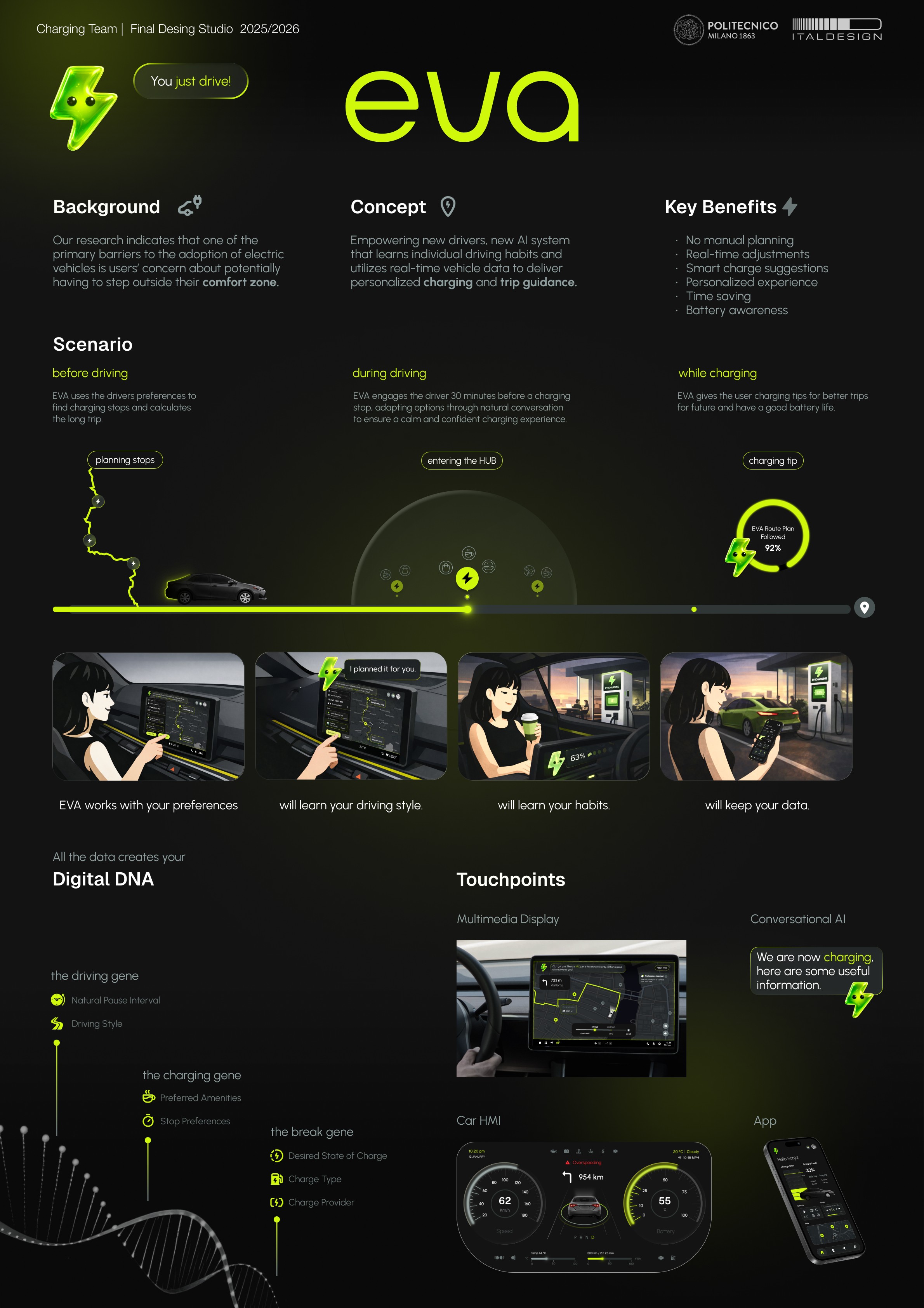
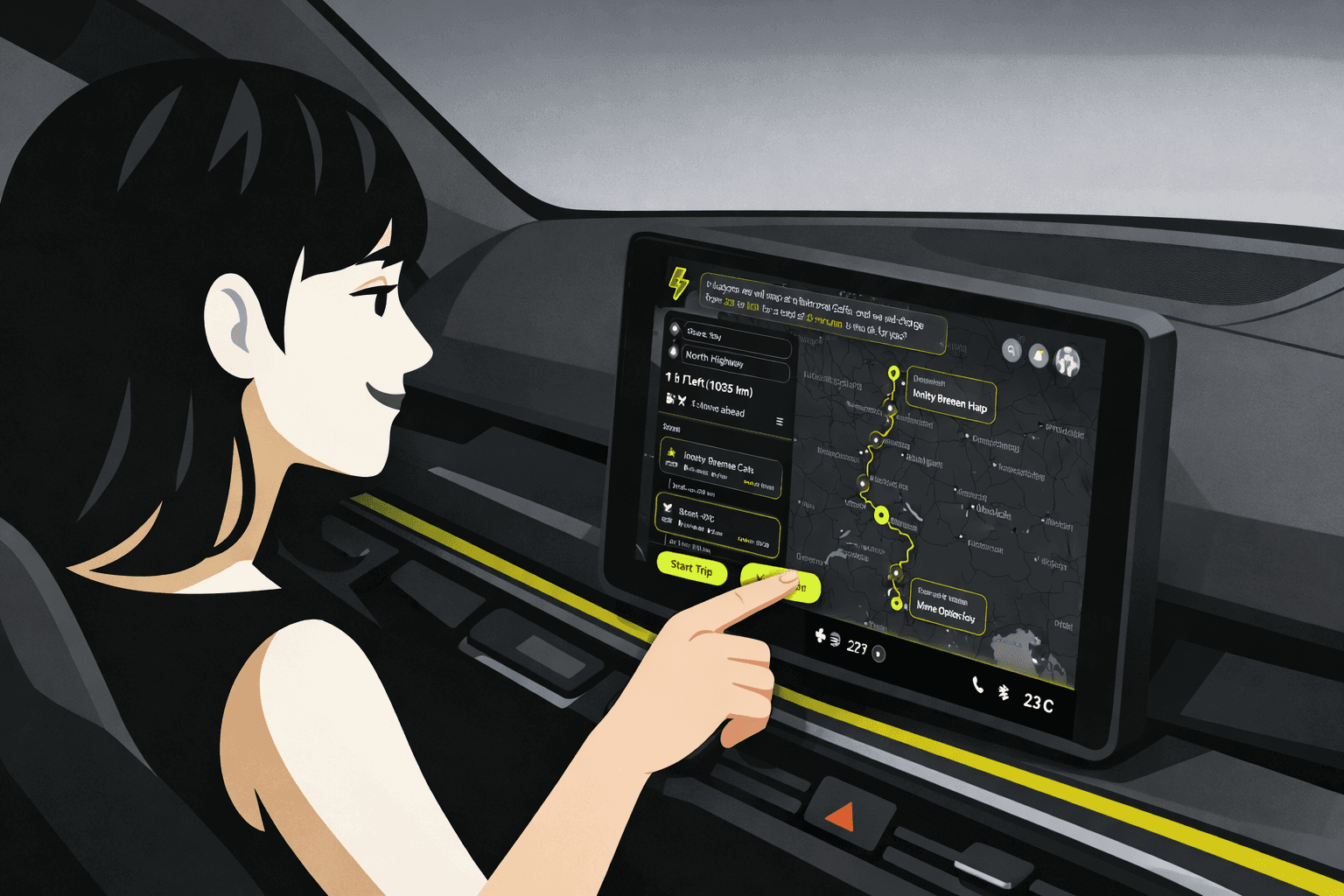
EVA is an AI-powered navigation assistant that transforms EV charging by building a unique "Digital DNA" for every driver. Using machine learning, it learns individual preferences; such as specific amenities or dining habits to proactively suggest tailored stops 20 minutes before arrival via a context-aware Voice User Interface (VUI). This creates a hyper-personalized, distraction-free journey that prioritizes the driver's comfort over just the battery status.
EVA is an AI-powered navigation assistant that transforms EV charging by building a unique "Digital DNA" for every driver. Using machine learning, it learns individual preferences; such as specific amenities or dining habits to proactively suggest tailored stops 20 minutes before arrival via a context-aware Voice User Interface (VUI). This creates a hyper-personalized, distraction-free journey that prioritizes the driver's comfort over just the battery status.
EVA is an AI-powered navigation assistant that transforms EV charging by building a unique "Digital DNA" for every driver. Using machine learning, it learns individual preferences; such as specific amenities or dining habits to proactively suggest tailored stops 20 minutes before arrival via a context-aware Voice User Interface (VUI). This creates a hyper-personalized, distraction-free journey that prioritizes the driver's comfort over just the battery status.
Project Timeline
Project Timeline
Project Timeline
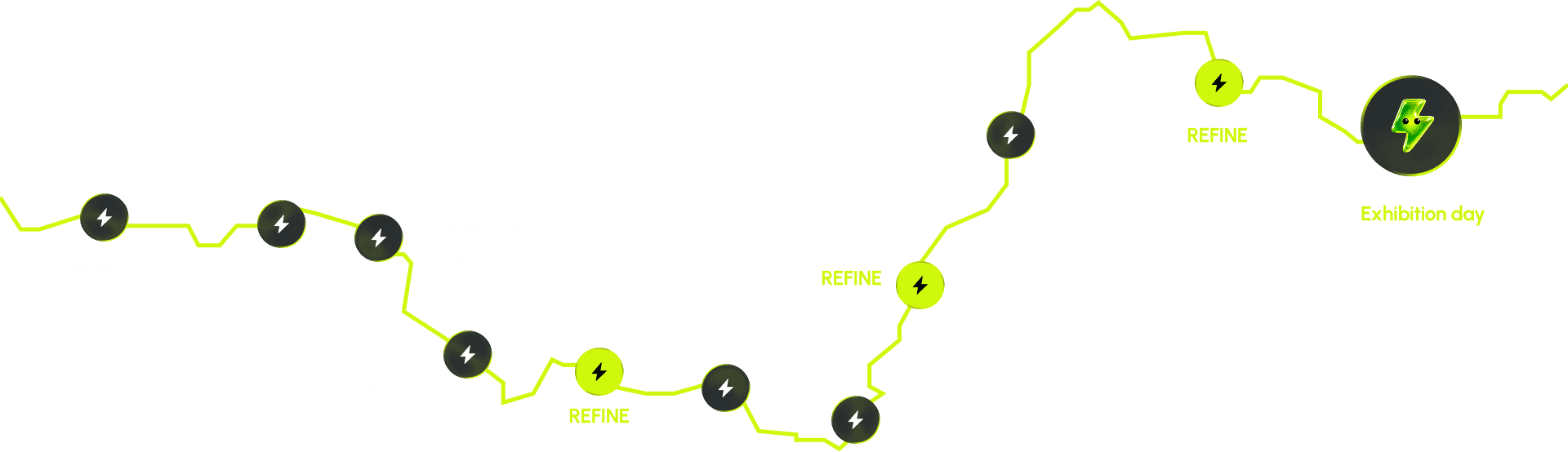
The creation of EVA was more than a process; it was an organic evolution. There were times when the path became unclear, causing us to question the concept and redefine our trajectory.
The creation of EVA was more than a process; it was an organic evolution.
The development of EVA was a long journey, during which we had to recharge and recalculate our route.
The development of EVA was a long journey, during which we had to recharge and recalculate our route.
The development of EVA was a long journey, during which we had to recharge and recalculate our route.
These iterations were crucial. But they were also
important steps. They helped us understand who
we are and what we want. These steps brought
maturity and depth to our final vision.
These iterations were crucial. They
brought maturity and depth to our
final vision.
UX research & Key Benefit
UX research & Key Benefit
Redefining the Road: The 2035 Paradigm
Redefining the Road: The 2035 Paradigm
Our findings
Our findings
Inspired by ItalDesign's briefing, we explore the future of mobility in the next decade, with a focus on charging.
Inspired by ItalDesign's briefing, we explore the future of mobility in the next decade, with a focus on charging.
Range anxiety & battery capacity remain big concerns: many potential buyers delay EV purchases until better range or battery tech.
Range anxiety & battery capacity remain big concerns: many potential buyers delay EV purchases until better range or battery tech.
Range anxiety is lowest during short spontaneous trips and traffic jams, and increases on long journeys and unfamiliar routes, reaching its peak in extreme weather conditions.
Range anxiety is lowest during short spontaneous trips and traffic jams, and increases on long journeys and unfamiliar routes, reaching its peak in extreme weather conditions.
Among potential EV buyers in Europe, charging infrastructure
is one of the top concerns (27%), followed by range (25%), and long charging times (18%).
Among potential EV buyers in Europe, charging infrastructure
is one of the top concerns (27%), followed by range (25%), and long charging times (18%).
Around half of charging sessions happen at home.
Around half of charging sessions happen at home.


Competitor Analysis
Competitor Analysis
Competitor Analysis
Adapting AI in the Industry
Adapting AI in the Industry
Adapting AI in the Industry
Why EVA?
Why EVA?
Why EVA?
Current automotive leaders have introduced sophisticated
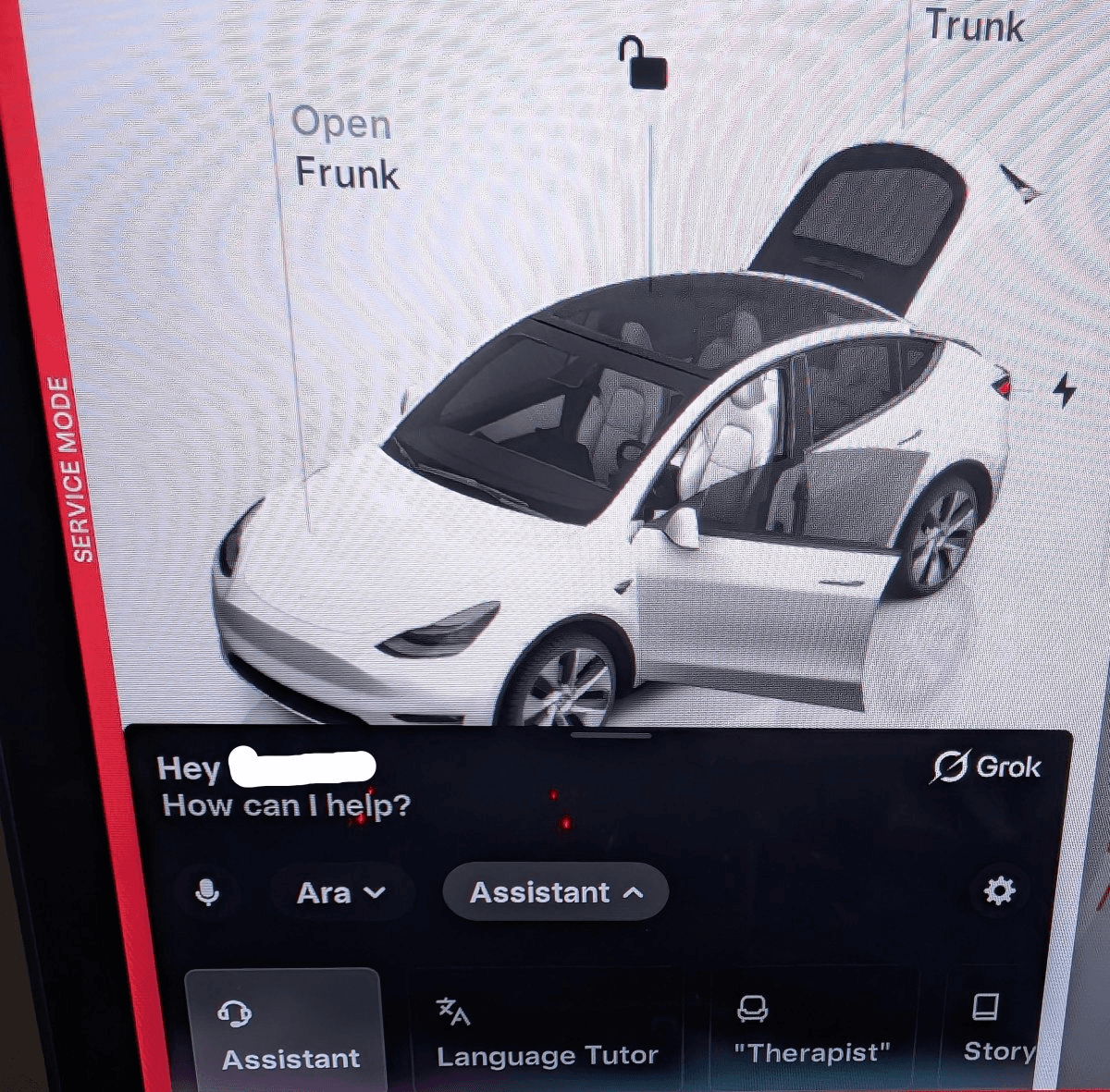
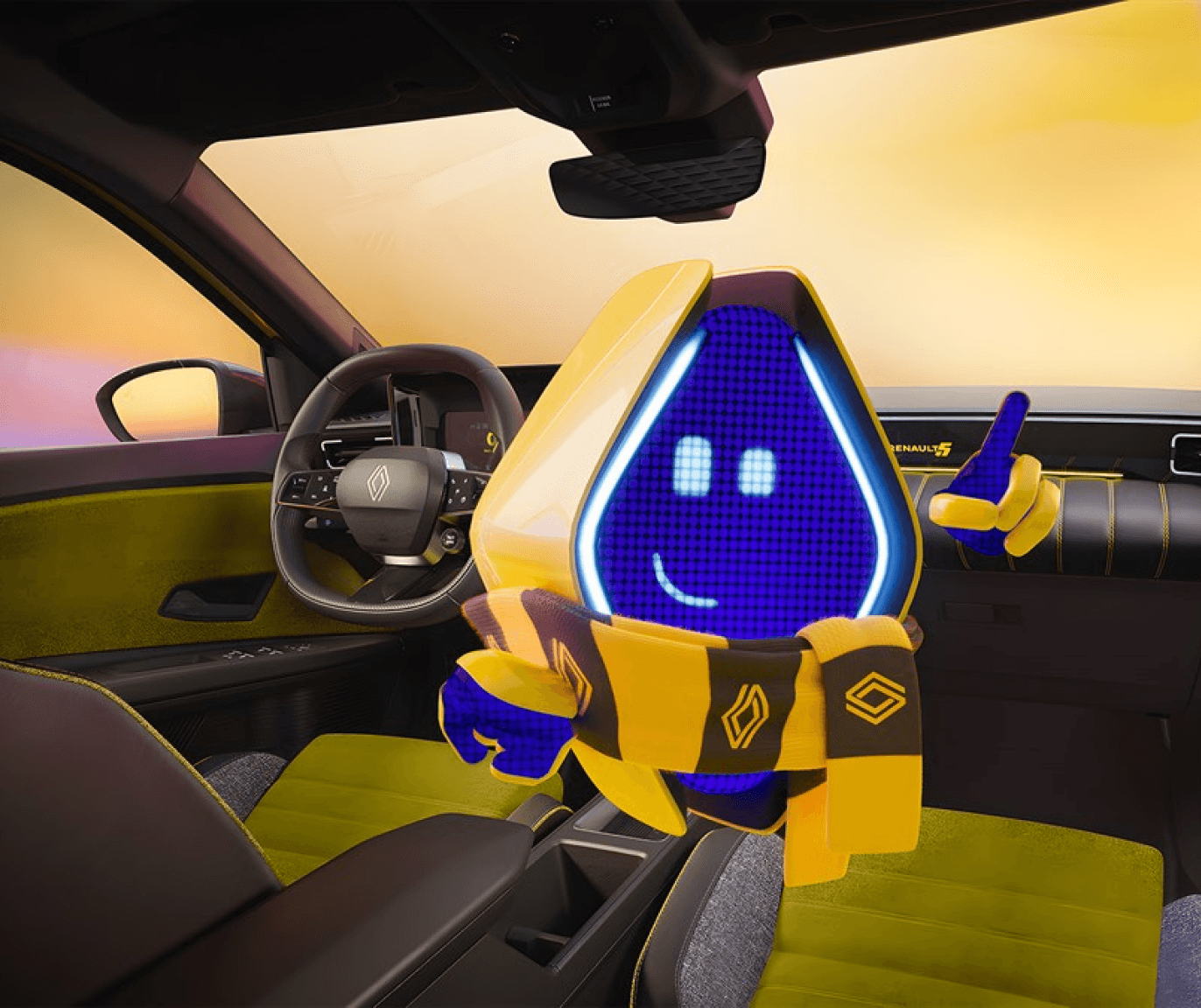
AI integrations to enhance the driving experience, such as Tesla’s Grok for real-time information processing and Renault’s Reno avatar for intuitive, humanized vehicle interaction. While these previous works have successfully demonstrated the potential for voice-activated assistants and general vehicle management, they primarily focus on entertainment or standard utility rather than specialized energy optimization.
Current automotive leaders have introduced sophisticated AI integrations to enhance the driving experience, such as Tesla’s Grok for real-time information processing and Renault’s Reno avatar for intuitive, humanized vehicle interaction. While these previous works have successfully demonstrated the potential for voice-activated assistants and general vehicle management, they primarily focus on entertainment or standard utility rather than specialized energy optimization.
Current automotive leaders have introduced sophisticated
AI integrations to enhance the driving experience, such as Tesla’s Grok for real-time information processing and Renault’s Reno avatar for intuitive, humanized vehicle interaction. While these previous works have successfully demonstrated the potential for voice-activated assistants and general vehicle management, they primarily focus on entertainment or standard utility rather than specialized energy optimization.
This gap reveals a significant opportunity: moving from general AI assistance to human-centric energy co-piloting. People will benefit from EVA because it addresses the specific "mental load" of long-distance EV travel that current systems overlook.
This gap reveals a significant opportunity: moving from general AI assistance to human-centric energy co-piloting. People will benefit from EVA because it addresses the specific "mental load" of long-distance EV travel that current systems overlook.
This gap reveals a significant opportunity: moving from general AI assistance to human-centric energy co-piloting. People will benefit from EVA because it addresses the specific "mental load" of long-distance EV travel that current systems overlook.
Tesla's Grok
Tesla's Grok
Renault's Reno
Renault's Reno

By transforming charging from
a technical necessity into a predictive, lifestyle-aligned experience, EVA ensures that every journey is optimized for both the driver’s comfort and the vehicle’s efficiency.
By transforming charging from
a technical necessity into a predictive, lifestyle-aligned experience, EVA ensures that every journey is optimized for
both the driver’s comfort and
the vehicle’s efficiency.
EVA learns individual driving habits and synchronizes charging stops with personal lifestyle preferences; such as favorite restaurant brands or preferred break durations.
EVA learns individual driving habits and synchronizes charging stops with personal lifestyle preferences; such as favorite restaurant brands or preferred break durations.
EVA learns individual driving habits and synchronizes charging stops with personal lifestyle preferences; such as favorite restaurant brands or preferred break durations.
By transforming charging from
a technical necessity into a predictive, lifestyle-aligned experience, EVA ensures that every journey is optimized for both the driver’s comfort and the vehicle’s efficiency.
UX research & Key Benefit
Redefining the Road:
The 2035 Paradigm
Our findings
Range anxiety is lowest during short spontaneous trips and traffic jams, and increases on long journeys and unfamiliar routes, reaching its peak in extreme weather conditions.
Among potential EV buyers in Europe, charging infrastructure
is one of the top concerns (27%), followed by range (25%), and long charging times (18%).
Around half of charging sessions happen at home.
Range anxiety & battery capacity remain big concerns: many potential buyers delay EV purchases until better range or battery tech.
Method
Method
Method
How We Built It To ensure we were solving the right problem, we started by listening.
We interviewed a mix of current and aspiring EV owners, discovering that the real pain point wasn't just finding chargers; it was the stress of adjusting plans while driving. We brain-stormed three ways to solve this, eventually discarding visual-heavy concepts in favor
of a voice-first assistant.
How We Built It To ensure we were solving the right problem, we started by listening.
We interviewed a mix of current and aspiring EV owners, discovering that the real pain point wasn't just finding chargers; it was the stress of adjusting plans while driving. We brain-stormed three ways to solve this, eventually discarding visual-heavy concepts in favor
of a voice-first assistant.
How We Built It To ensure we were solving the right problem, we started by listening.
We interviewed a mix of current and aspiring EV owners, discovering that the real pain point wasn't just finding chargers; it was the stress of adjusting plans while driving. We brain-stormed three ways to solve this, eventually discarding visual-heavy concepts in favor
of a voice-first assistant.
Interviews
Interviews
We conducted interviews at two key moments to capture real experiences with electric cars.
age 25
she had an electric car before
“The promised range is usually not met; the charge runs out much sooner than expected.”
age 30
has an family electric car, he works
age 62
has an electric car
does not work, retired
“Had to learn the battery and the range first to make the plan because it really differentiates how you use the car.”
“The measurement of the range is misleading because the highway and in city driving differentiates.”
age 25
he had an electric car before
“Few times I almost left out of energy and I barely made to charge.”
Interviews
Interviews
Target Users
Target Users
Insights
We conducted interviews at two key moments to capture real experiences with electric cars.
We conducted interviews at two key moments to capture real experiences with electric cars.
We acted as potential buyers at dealerships to evaluate the in-car systems and the onboarding process and the plan trip interface.
We acted as potential buyers at dealerships to evaluate the in-car systems and the onboarding process and the plan trip interface.
Drivers often find the "promised range" misleading, noting that high speeds and driving styles significantly drain the battery.
EV ownership requires a strategic mindset; users must pre-plan routes, manage battery levels and prepare for longer charging times on trips.
Home charging is the anchor of the EV experience, however going on a long trip could be overwhelming sometimes.
age 30
has an family electric car, he works
age 30
has an family electric car, he works
age 62
has an electric car
does not work, retired
age 62
has an electric car
does not work, retired
age 25
she had an electric car before
age 25
she had an electric car before
age 25
he had an electric car before
age 25
he had an electric car before
“The promised range is usually not met; the charge runs out much sooner than expected.”
“The promised range is usually not met; the charge runs out much sooner than expected.”
“Few times I almost left out of energy and I barely made to charge.”
“Few times I almost left out of energy and I barely made to charge.”
“Had to learn the battery and the range first to make the plan because it really differentiates how you use the car.”
“Had to learn the battery and the range first to make the plan because it really differentiates how you use the car.”
“The measurement of the range is misleading because the highway and in city driving differentiates.”
“The measurement of the range is misleading because the highway and in city driving differentiates.”
1
2
3
Roleplay as EV buyers
Roleplay as EV buyers
MVP
MVP
Madness Day Demo
Madness Day Demo
(1)
(1)
(2)
(2)
(2)
(2)
(1)
(1)
(3)
(3)
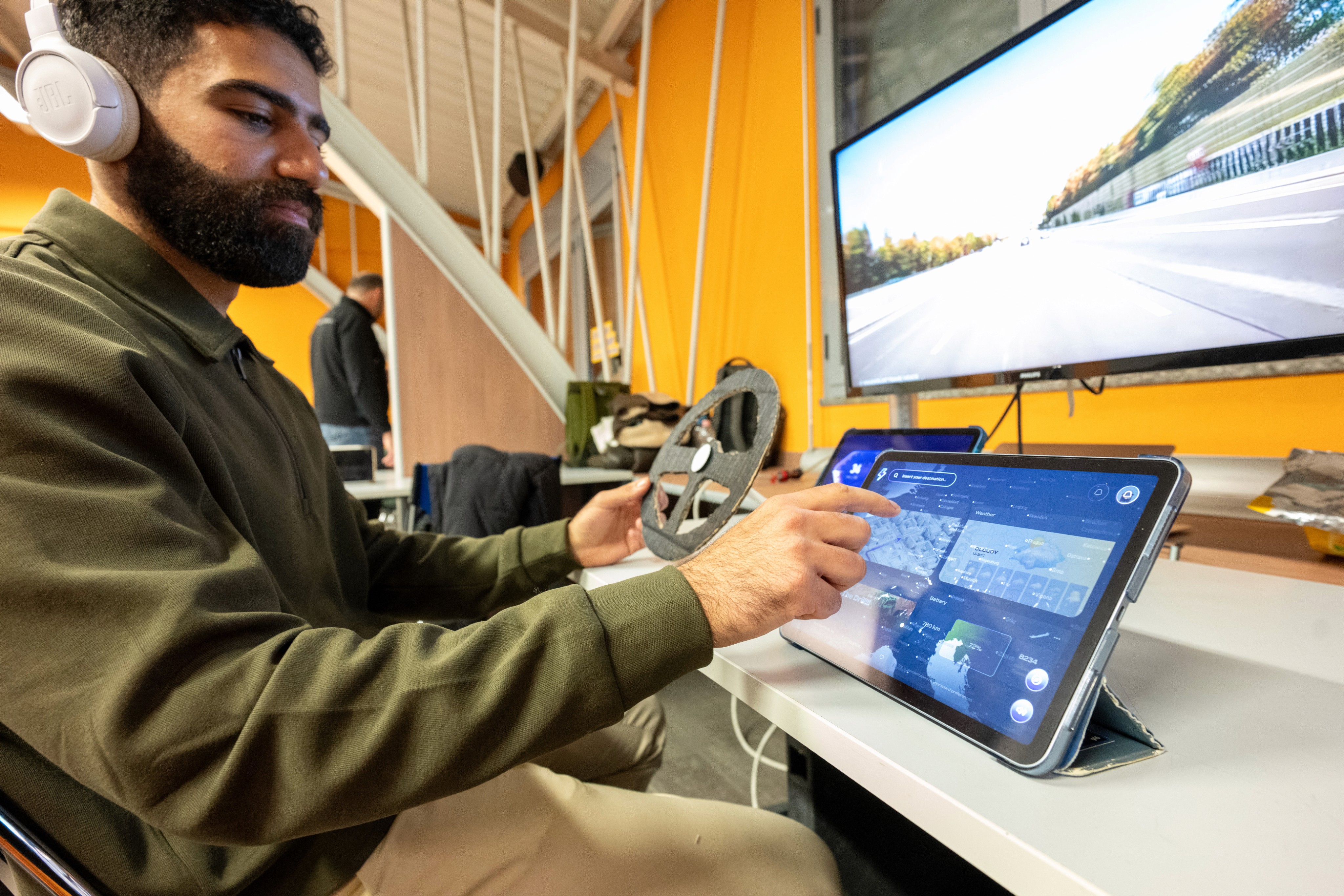
Stress-Testing Empathy During our "Madness Day" showcase, we deployed a unique iteration of the product designed to listen for how the driver spoke, not just what they said. This MVP concentrated exclusively on detecting distress, utilizing audio analysis to flag vocal cues associated with fear or panic. This method has proved to be challenging, and we later focused on driver's autonomy rather than stress levels.
Stress-Testing Empathy During our "Madness Day" showcase, we deployed a unique iteration of the product designed to listen for how the driver spoke, not just what they said. This MVP concentrated exclusively on detecting distress, utilizing audio analysis to flag vocal cues associated with fear or panic. This method has proved to be challenging, and we later focused on driver's autonomy rather than stress levels.
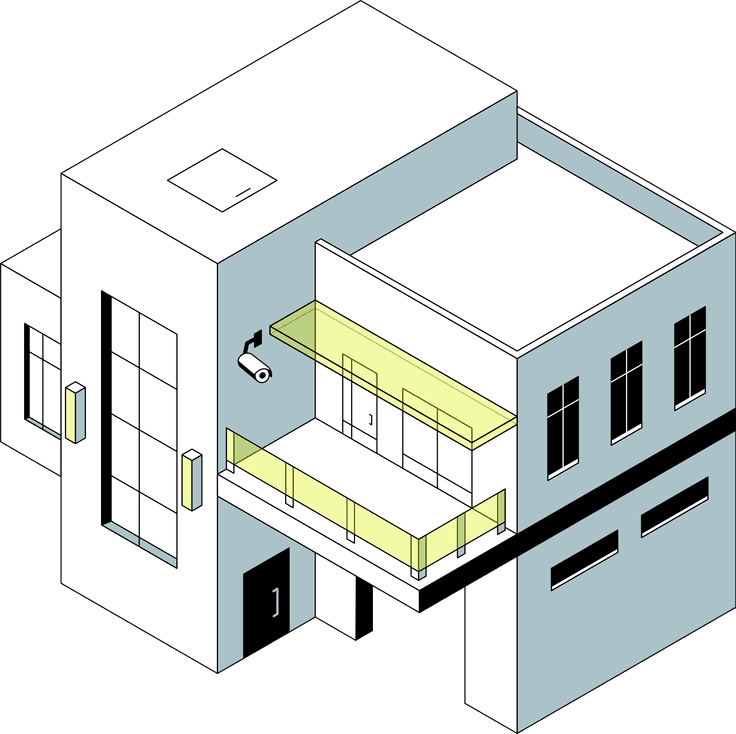
representation of the testing area
representation of the testing area

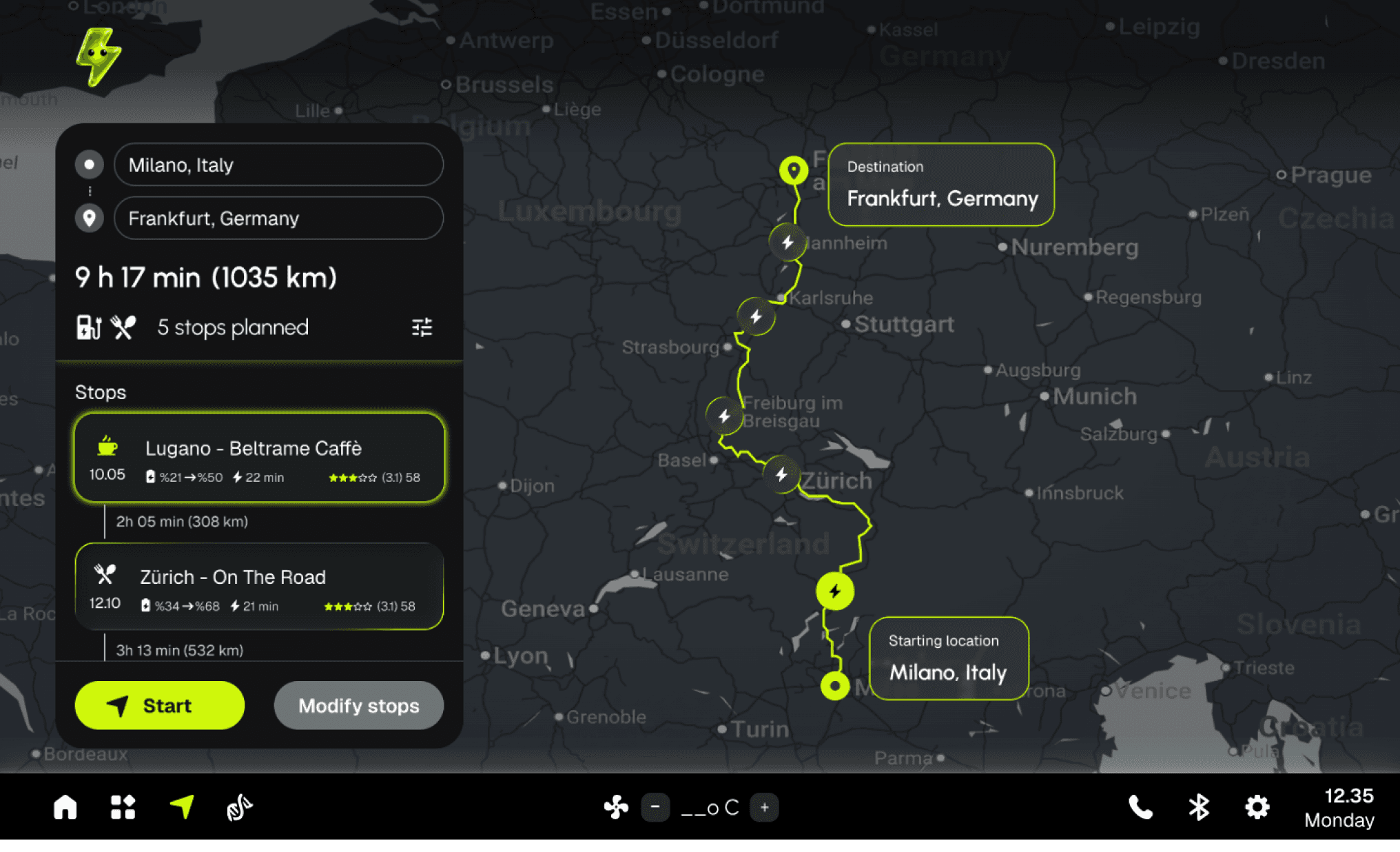

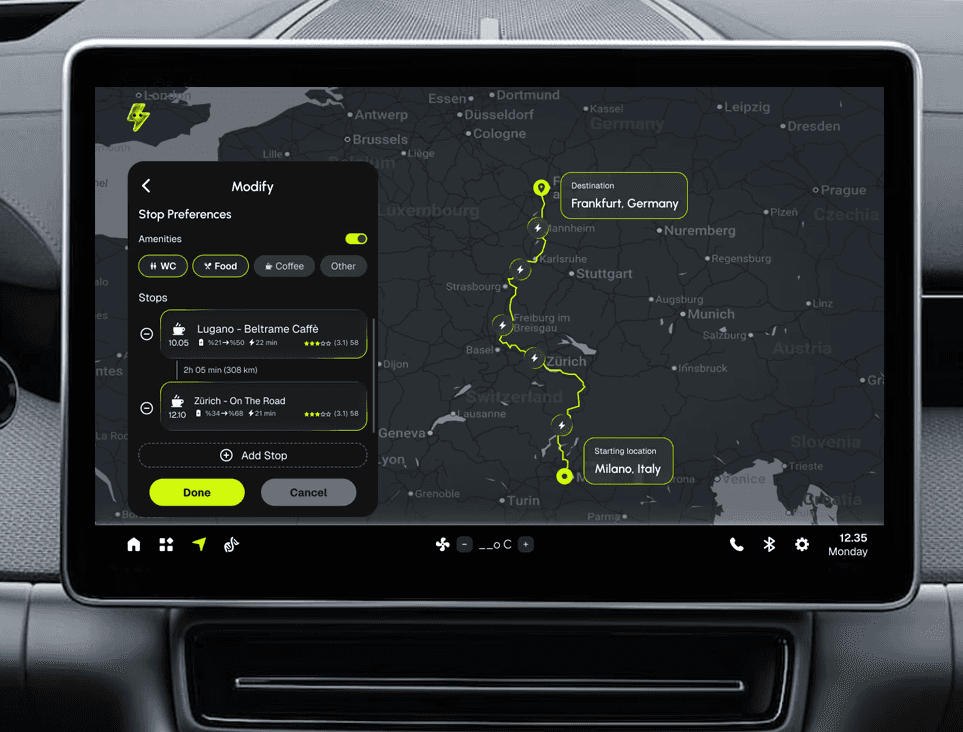
Smart planning, according to preferences
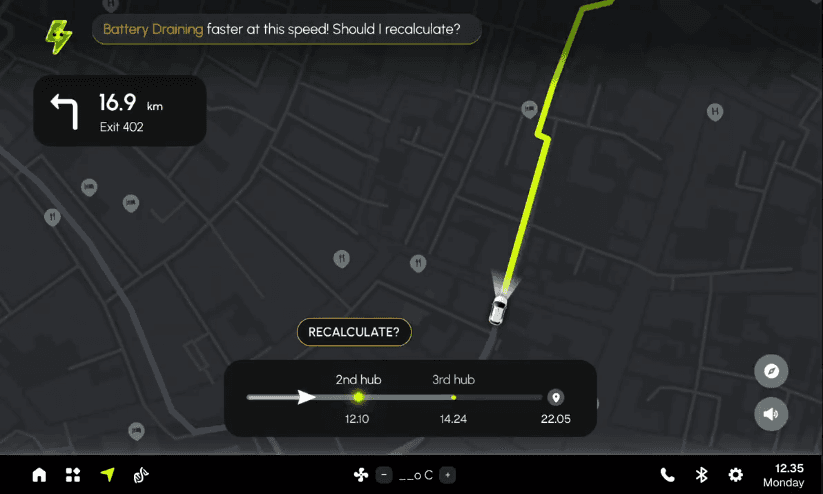
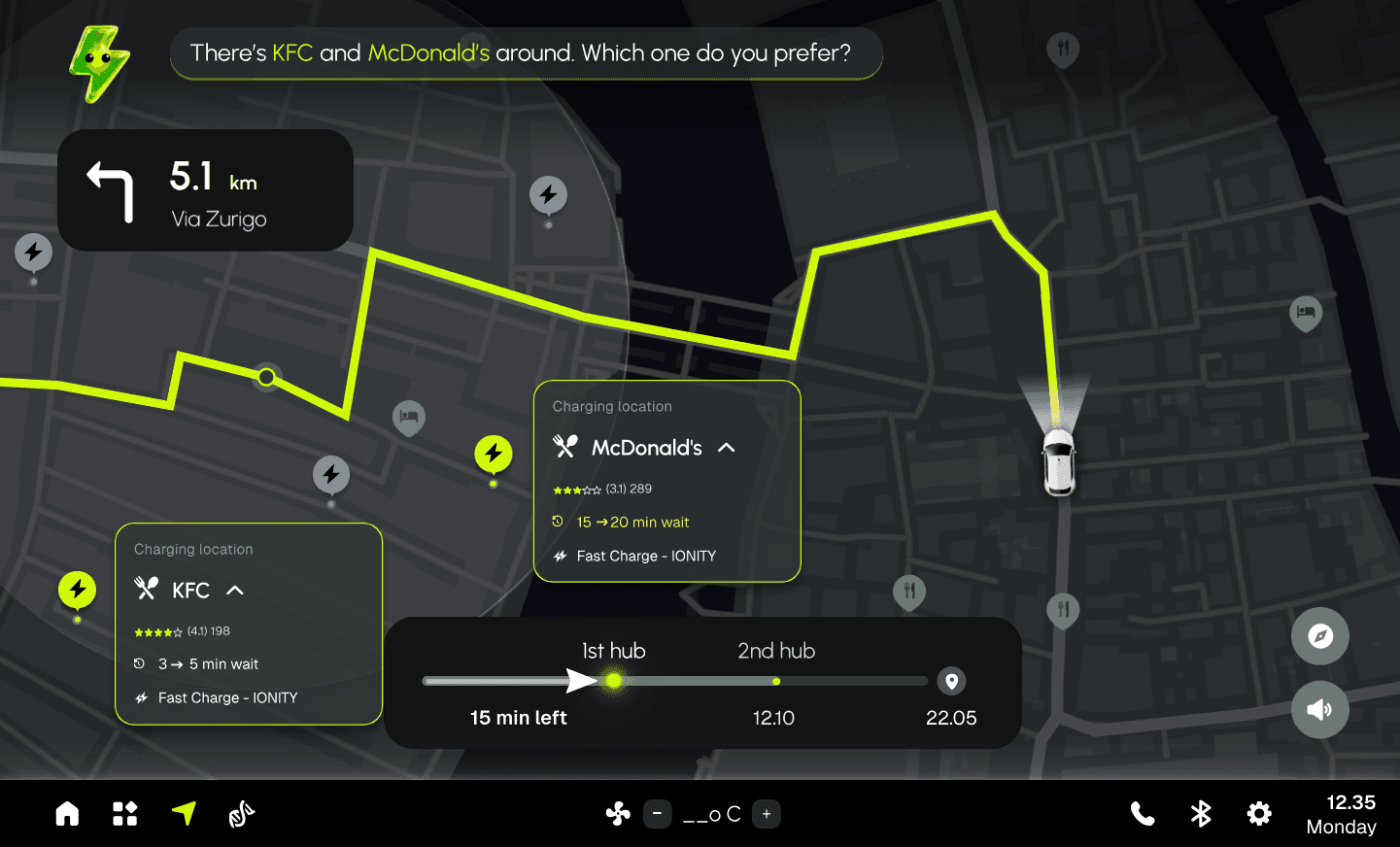
Re-routing when exceeding average speed.
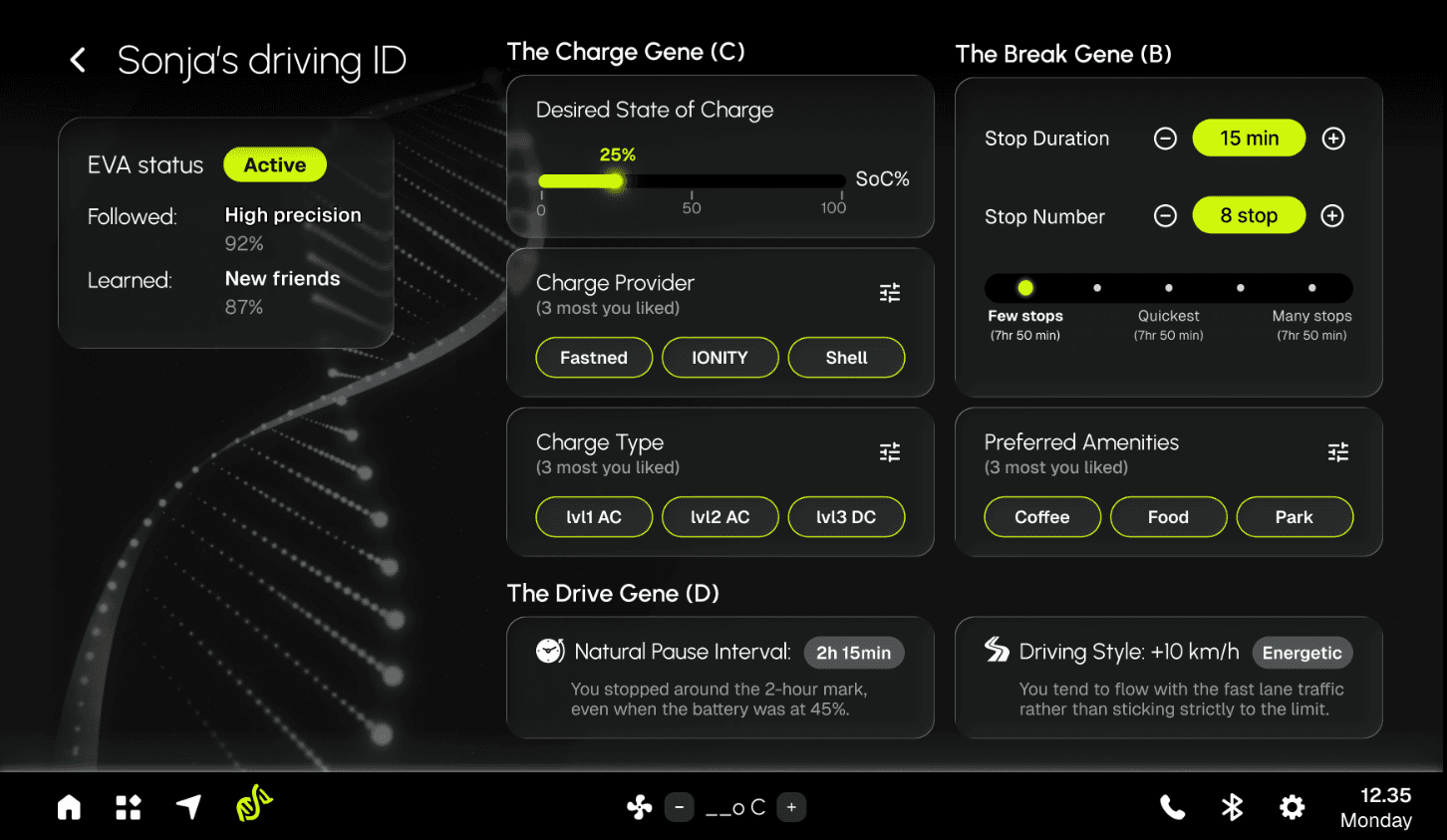
Digital DNA that learns from each trip.
Re-adjusting when approaching each hub.
Development Tools
We have used Figma to design the interface screens and ProtoPie to create functional interactions for the final display, simulating an AI capable of interacting while listening to the user speak. We also used QT for developing interactive dashboard.



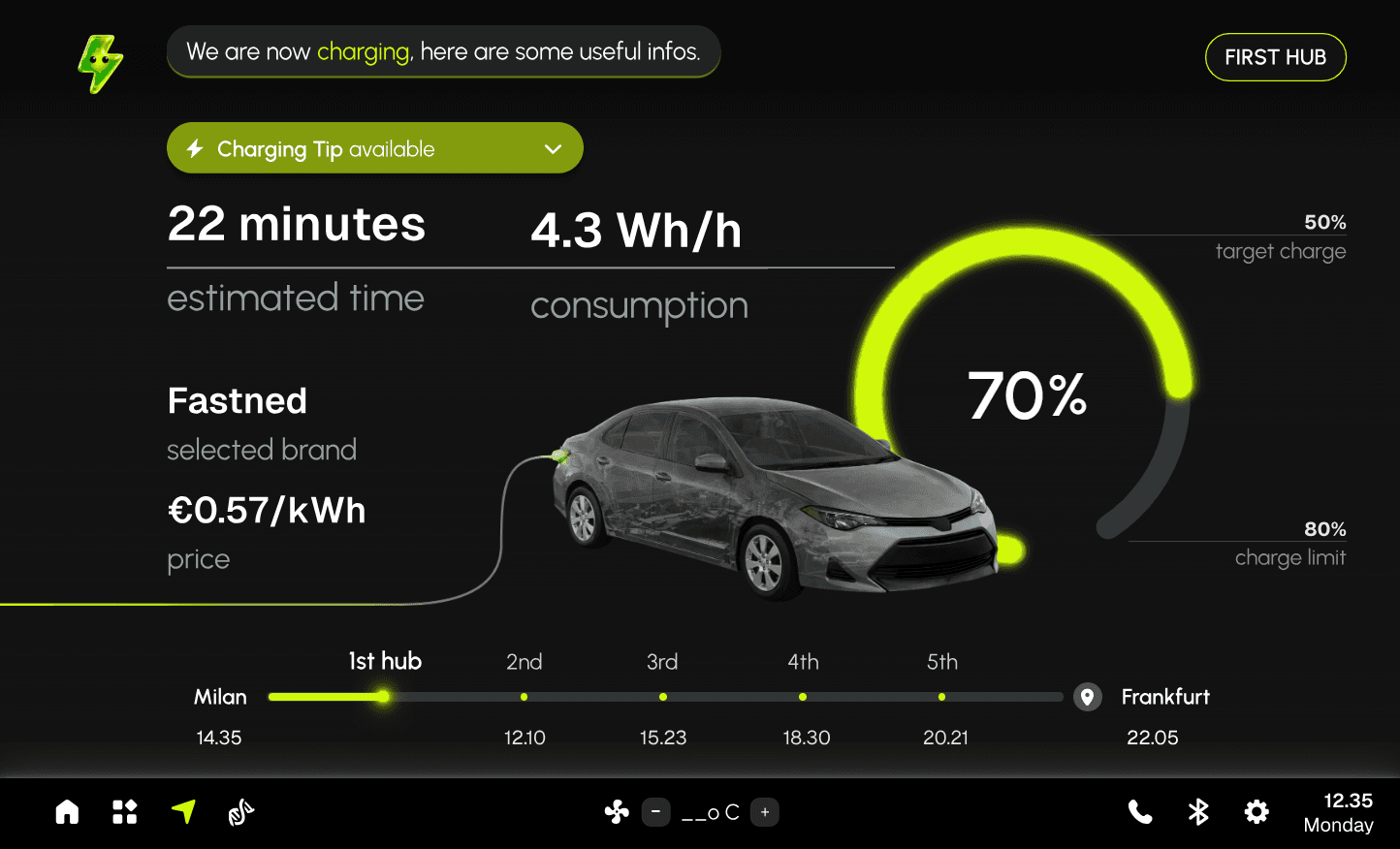
Charging screen, with skipping stop option.
Main Screen
Main Screen
Center Display
Center Display
Battery Level
Battery Level
Time / Date
Time / Date
Search Bar
Search Bar
Search Bar
Search Bar
Map
Map
Planned Stops
Planned Stops
Start Button
Start Button
Modify Button
Modify Button
Filter (Preference)
Filter (Preference)
Trip Time
Trip Time
Before Driving
Before Driving
In Hub Label
In Hub Label
Map
Map
Hub Statu Badge
Hub Statu Badge
Route Path
Route Path
Possible Chargers
Possible Chargers
Selected Stop
Selected Stop
Direction / Km
Direction / Km
During Driving (Inside Hub)
During Driving (Inside Hub)
Hub Label
Hub Label
Charging Tip
Charging Tip
Battery Level
Battery Level
Consumption
Consumption
Trip Statu Badge
Trip Statu Badge
Charge Time
Charge Time
Arrival (While Charging)
Arrival (While Charging)
Menu Icons
Menu Icons
Home
Home
Apps
Apps
Navigation
Navigation
Digital DNA
Digital DNA
Amenities
Amenities
Stops
Stops
Add/delete stop
Add/delete stop
Done / Cancel
Done / Cancel
Desired Battery
Desired Battery
Stops
Stops
Charger Type
Charger Type
Done / Cancel
Done / Cancel
Climate (A/C)
Climate (A/C)
Planned Hubs
Planned Hubs
Phone
Phone
Bluetooth
Bluetooth
Settings
Settings
Status Bar
Status Bar
Menu Bar
Menu Bar
Charge Limit
Charge Limit
Battery health
Battery health
Tire Pressure
Tire Pressure
Estimated Range
Estimated Range
Map
Map
Music
Music
Weather
Weather
Agenda
Agenda
Remain Kilometers
Remain Kilometers
Remaining Time
Remaining Time
Digital DNA
Digital DNA
AI Buddy (EVA)
AI Buddy (EVA)
On / Off
On / Off
Search Bar
Search Bar
Notification
Notification
Profile
Profile
Search Bar
Search Bar
Notification
Notification
Profile
Profile
Product Development
Product Development
Information Architecture
Information Architecture
is designed to plan, secure, and manage your charging.
is designed to plan, secure, and manage your charging.
Empowering new drivers, new AI system that learns individual driving habits and utilizes real-time vehicle data to deliver personalized charging and trip guidance.
Empowering new drivers, new AI system that learns individual driving habits and utilizes real-time vehicle data to deliver personalized charging and trip guidance.

The user needs to enter the destination. EVA plans the stops according driver information.
The user needs to enter the destination. EVA plans the stops according driver information.
Driver can modify the preferences of charging break duration and desired needs.
Driver can modify the preferences of charging break duration and desired needs.
If the driver is over speeding and draining the battery from expected, EVA gives feedback to the driver and rearranges the journey.
If the driver is over speeding and draining the battery from expected, EVA gives feedback to the driver and rearranges the journey.
How does it work?
How does it work?
Battery Draining faster at this speed! Should I recalculate?
Battery Draining faster at this speed! Should I recalculate?
Driver can review the journey with these charging tips and all the data is saved on the digital DNA of the driver.
EVA confirms the driver needs before going inside the HUB.
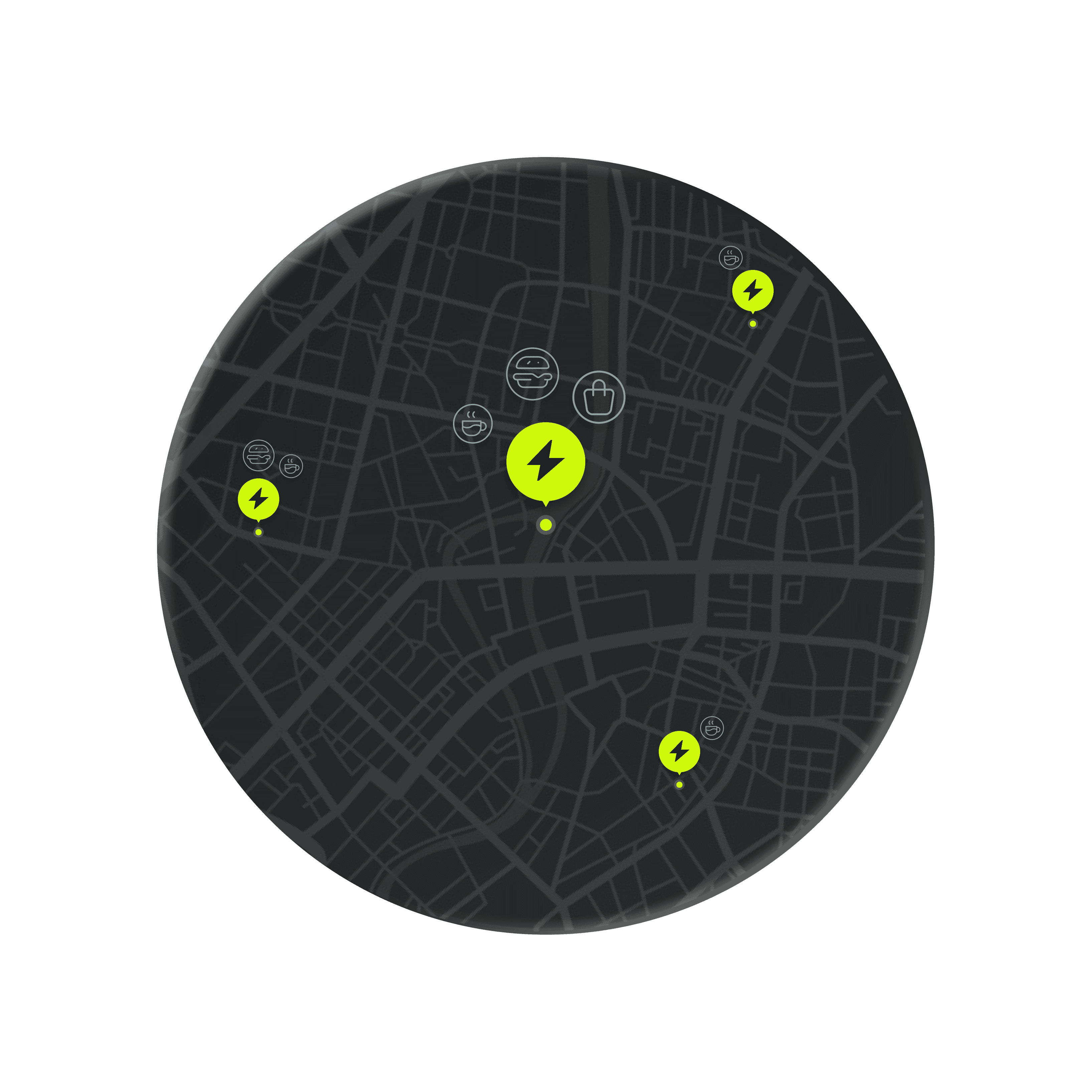
EVA gets instant information about the selections and waiting times of charging
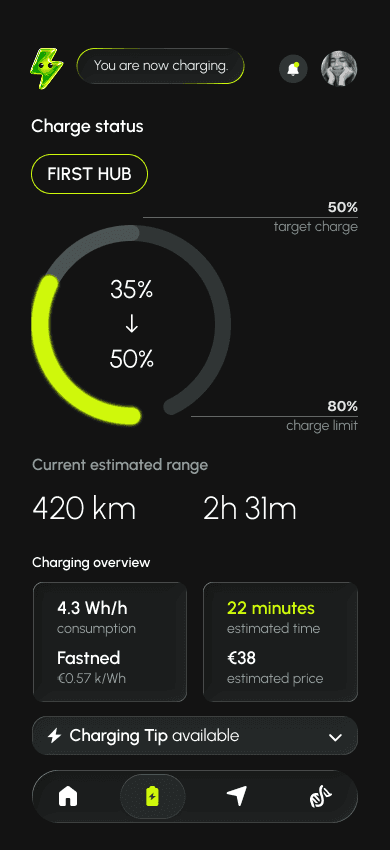

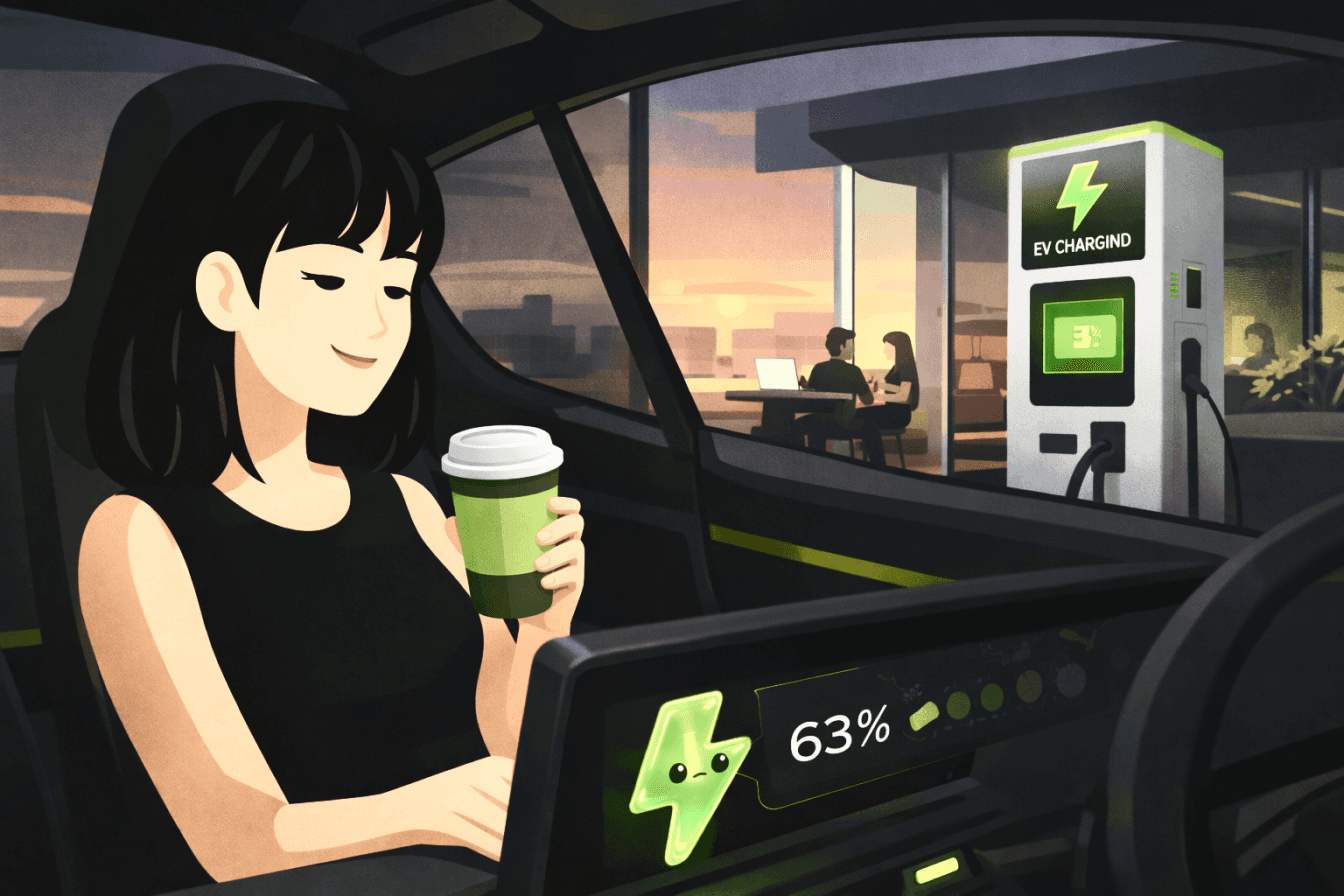
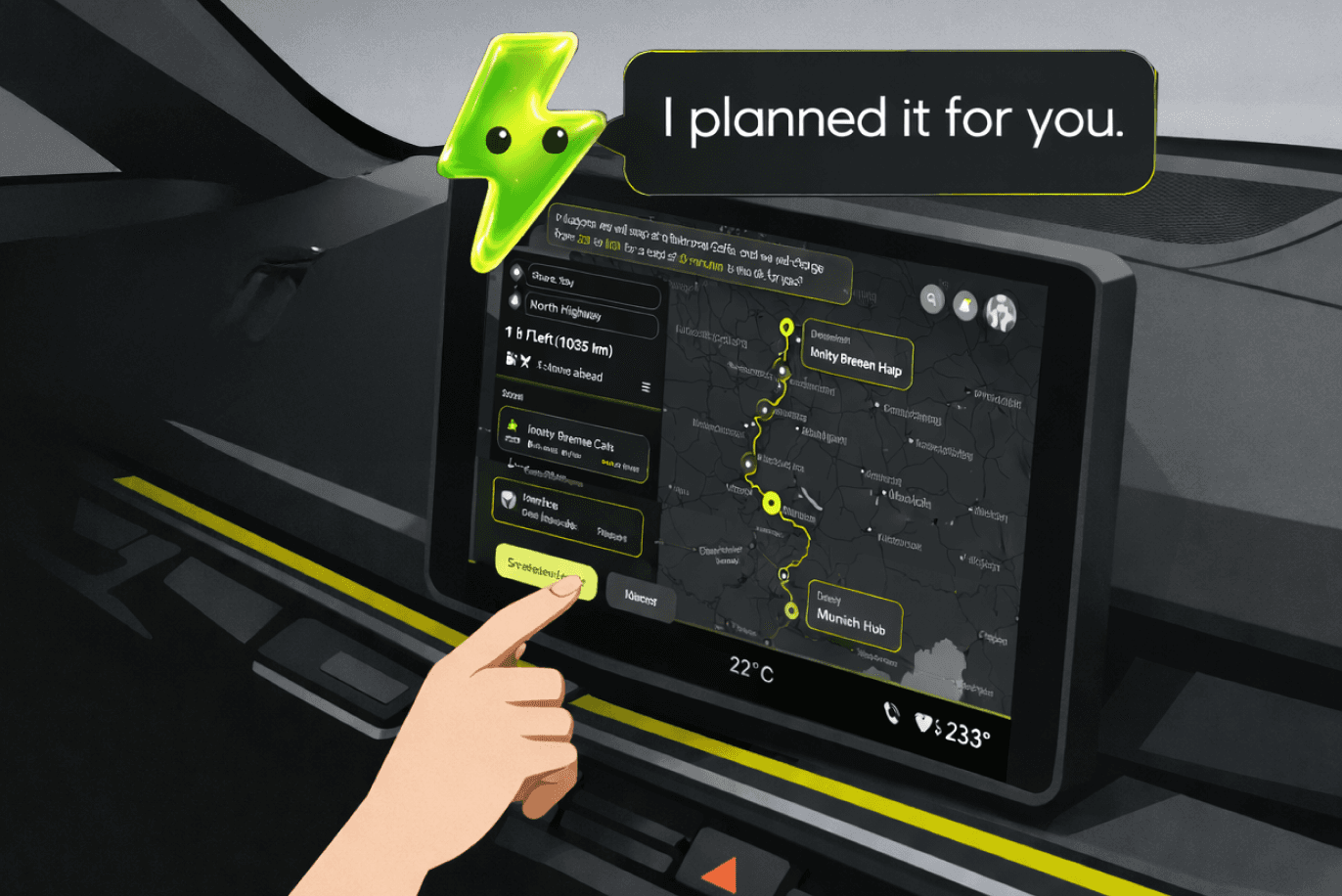
Driver can review the journey with these charging tips and all the data is saved on the digital DNA of the driver.
EVA confirms the driver needs before going inside the HUB.
EVA gets instant information about the selections and waiting times of charging
User Interface
User Interface
User Interface
17
17
17
Smart planning, according to preferences
Smart planning, according to preferences
Charging screen, with skipping stop option.
Charging screen, with skipping stop option.
Re-routing when exceeding average speed.
Re-routing when exceeding average speed.
Digital DNA that learns from each trip.
Digital DNA that learns from each trip.
Re-adjusting when approaching each hub.
Re-adjusting when approaching each hub.
Development Tools
Development Tools
We have used Figma to design the interface screens and ProtoPie to create functional interactions for the final display, simulating an AI capable of interacting while listening to the user speak. We also used QT for developing interactive dashboard.
We have used Figma to design the interface screens and ProtoPie to create functional interactions for the final display, simulating an AI capable of interacting while listening to the user speak. We also used QT for developing interactive dashboard.
Final Showcase
Final Showcase
(1)
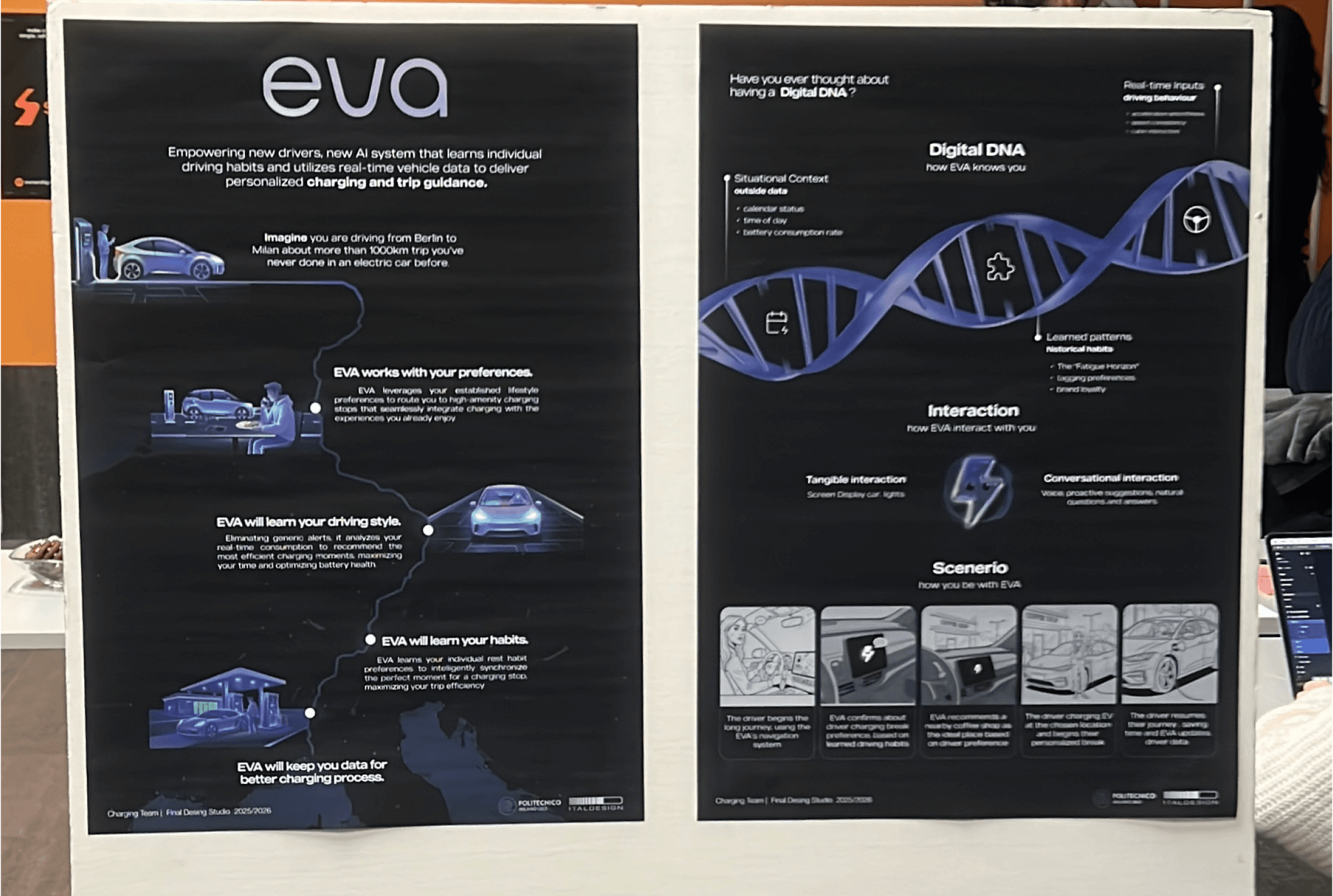
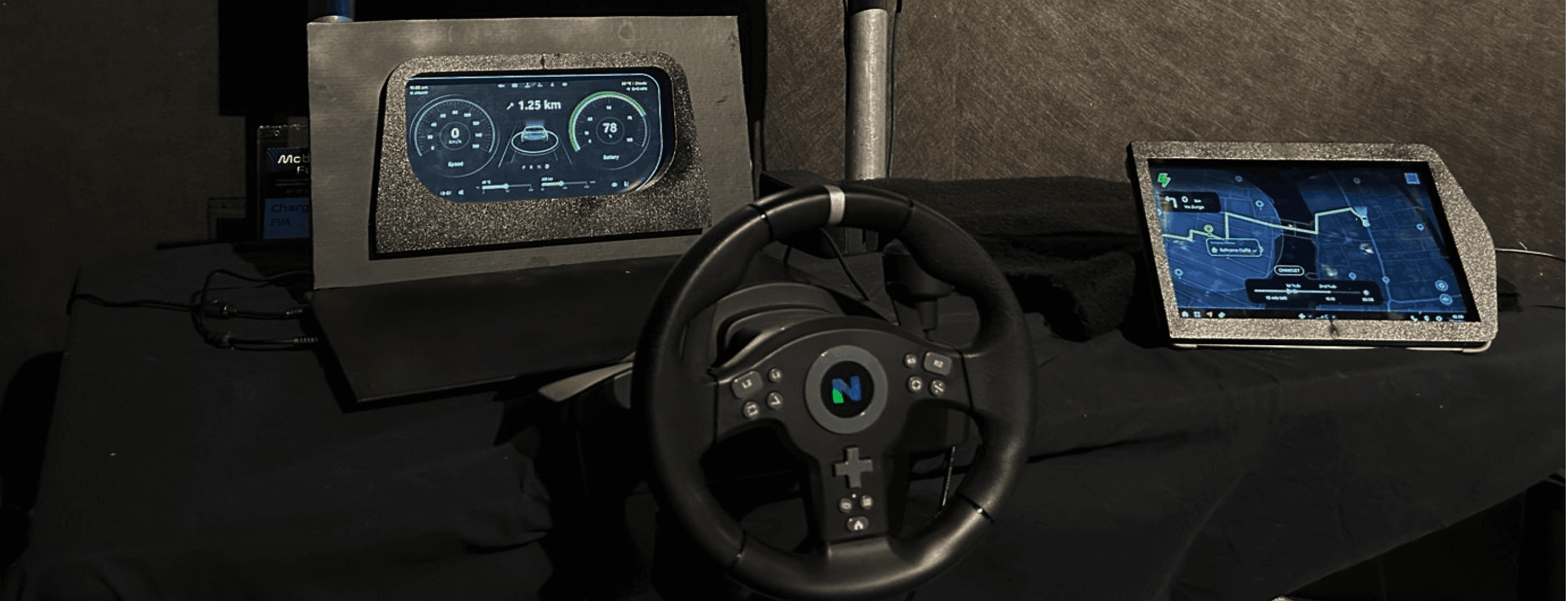
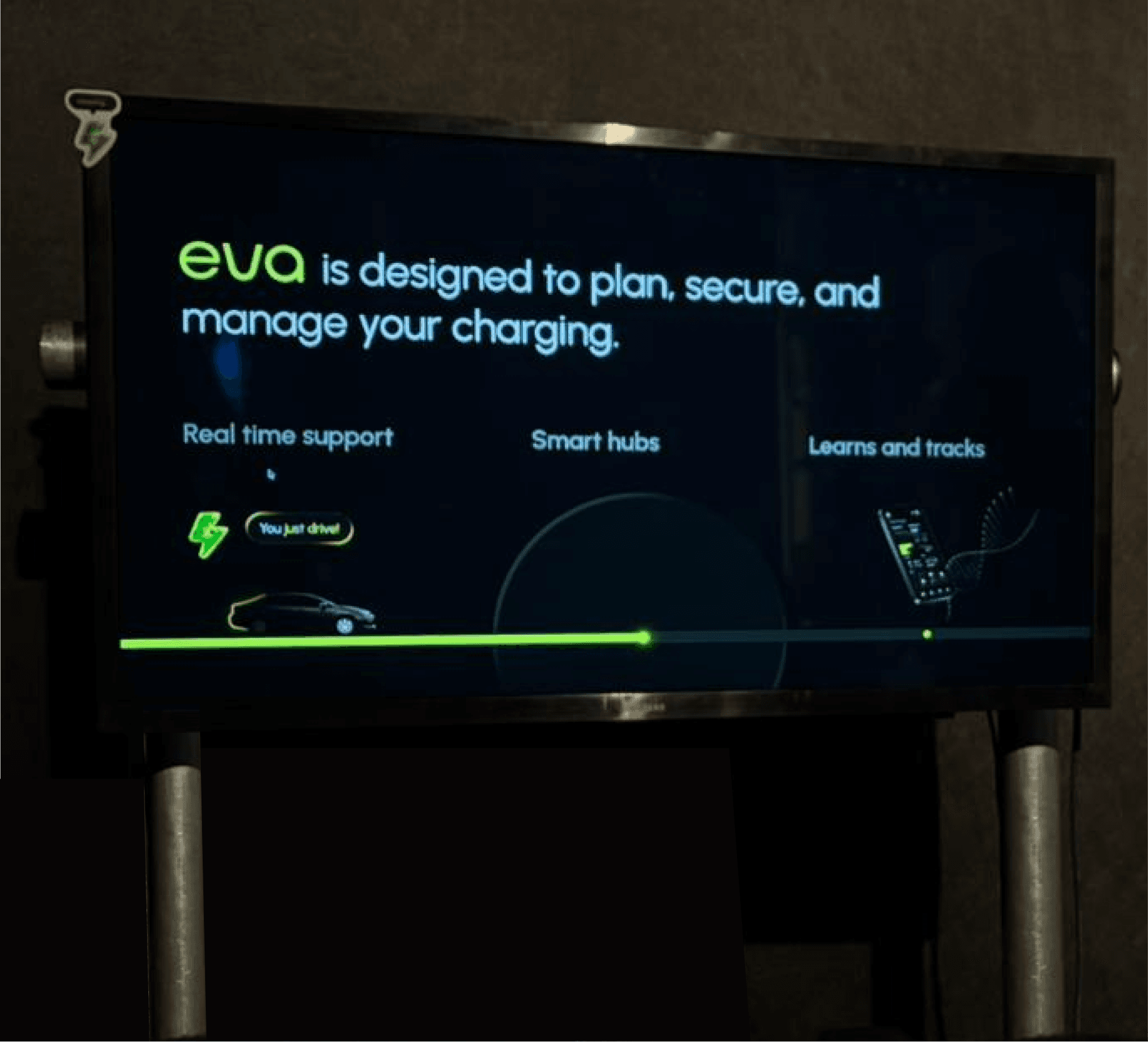
The testing area was organized into three distinct sections. In the first section (1), we welcomed participants and provided a project overview using the developed posters. The second section (2), featured a monitor with engaging visual slides designed to capture the attention of participants while effectively outlining the core problem and our proposed solution. Finally, the third section (3), users tested the prototype by simulating an interaction with EVA during a long-distance journey across four different scenarios.
The testing area was organized into three distinct sections. In the first section (1), we welcomed participants and provided a project overview using the developed posters. The second section (2), featured a monitor with engaging visual slides designed to capture the attention of participants while effectively outlining the core problem and our proposed solution. Finally, the third section (3), users tested the prototype by simulating an interaction with EVA during a long-distance journey across four different scenarios.
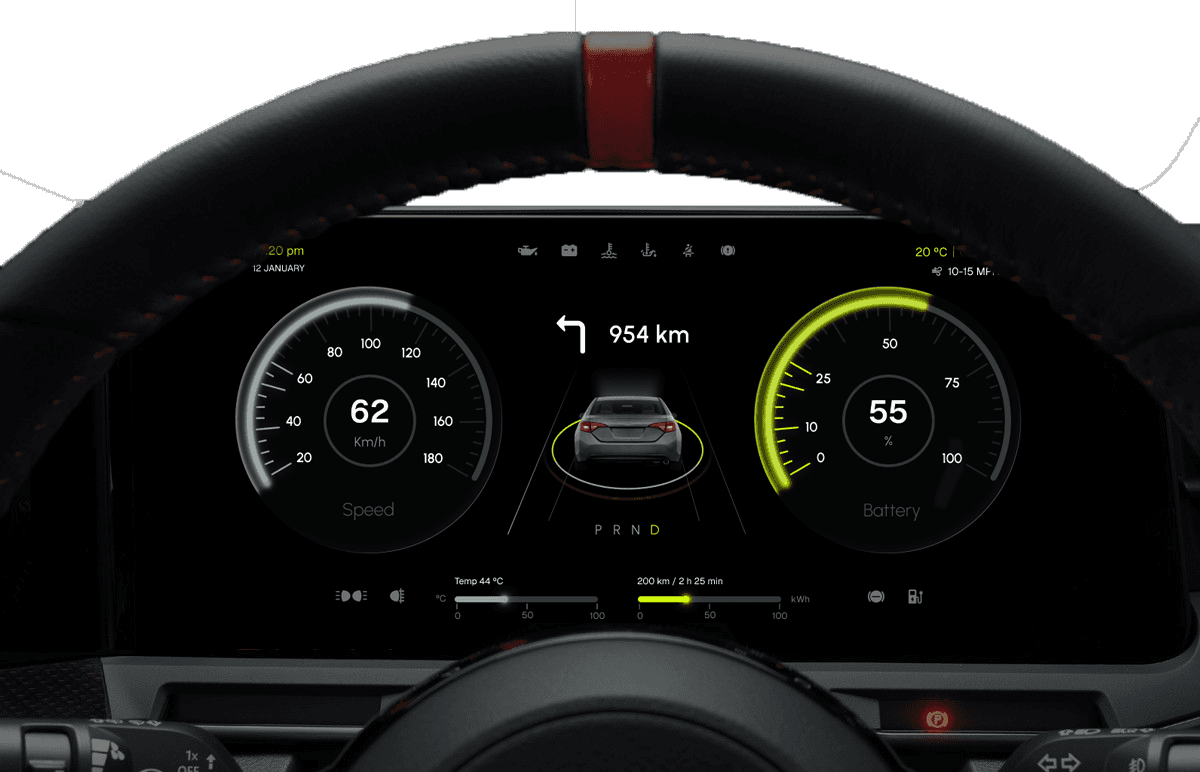
instrument cluster
instrument cluster
center display
center display
representation of the showcase area
representation of the showcase area
(3)
(3)
(2)
(2)
(1)
(1)



(2)
(2)
(3)
(3)